VISIT OUR COUNTRY STORE | USED TOOLS & CLOTHING
Applying nutrients accurately is essential for consistent crop performance and efficient input use. Across both arable and grassland systems, the way fertiliser is distributed can directly influence yield, crop uniformity and overall profitability.
Modern farms are placing greater emphasis on precision and timing. Matching application to soil type, crop demand and seasonal conditions ensures nutrients are used effectively while reducing waste. In regions such as Lincolnshire, where large acreages are common, efficiency and accuracy are increasingly important factors in machinery selection.
Fertiliser spreaders are available in a range of configurations to suit different farm sizes and operational needs.
Mounted units are typically used on small to medium farms, offering flexibility and ease of handling. These machines attach directly to the tractor and are well suited to fields where manoeuvrability is important.
For larger operations, trailed machines provide increased capacity and wider working widths. This allows more hectares to be covered in shorter timeframes, particularly during key application periods in spring and autumn.
Different spreading systems also influence performance. Disc-based systems are widely used for their ability to achieve wide, even coverage at higher speeds, while pendulum systems offer more controlled application patterns in tighter or more specific environments.
When upgrading equipment, many farms compare new machinery with used options to balance cost and performance. Working with established suppliers also ensures access to parts and long-term support.
Selecting the right setup involves ensuring compatibility with the existing tractor fleet.
Adequate horsepower is required to maintain consistent PTO speed, which directly affects spreading accuracy. Working width must also align with tramline spacing to avoid overlap or missed areas.
A well-matched combination improves efficiency and ensures nutrients are distributed evenly across the field.
Advances in technology have significantly improved fertiliser application.
Modern systems allow operators to control application rates and working widths directly from the cab. When combined with GPS, this enables variable rate application based on field conditions and crop performance.
This level of control reduces waste, improves efficiency and supports more consistent crop development, particularly across larger fields.
Even with modern equipment, calibration remains essential.
Granule size, density and moisture content all affect how fertiliser spreads. Regular testing ensures even distribution across the full working width.
Accurate application supports better nutrient uptake and more uniform crop growth, which ultimately contributes to improved yield.
Fertiliser application works best when aligned with wider cultivation practices.
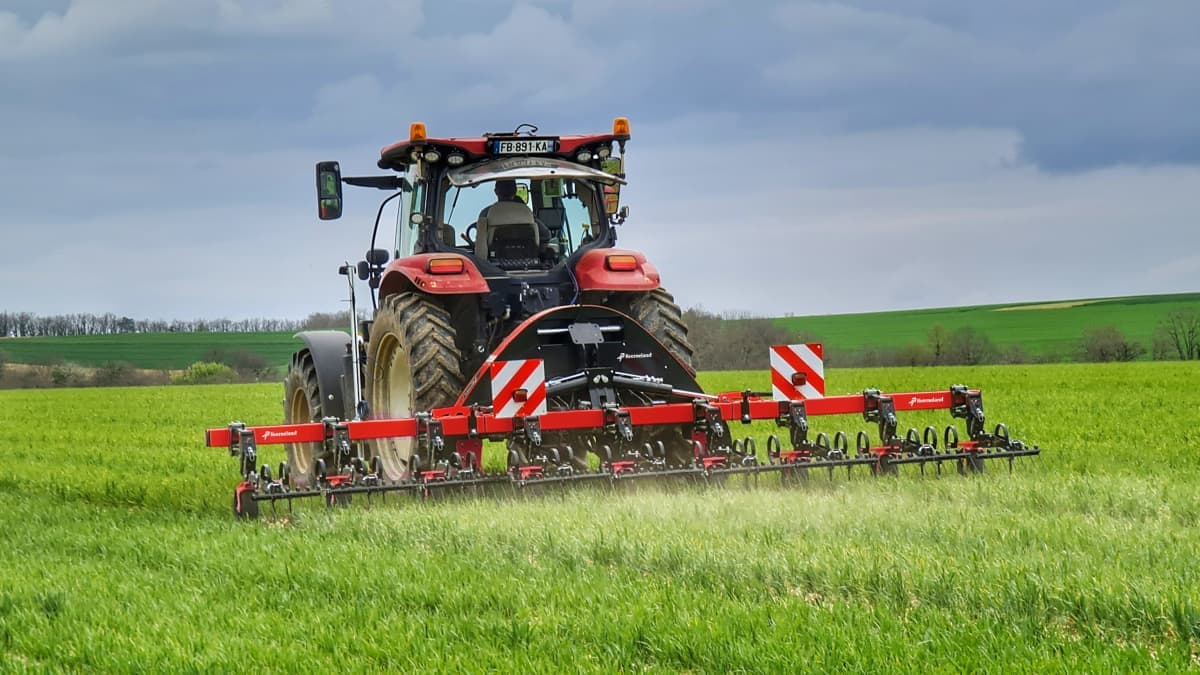
Creating the right seedbed is critical, and this is where equipment such as power harrows plays an important role. By breaking down clods and producing a level, well-structured surface, they create the conditions needed for even germination and effective nutrient uptake .
In practical terms, applying fertiliser after proper seedbed preparation ensures nutrients are more evenly distributed within the topsoil, where early root development takes place. Power harrows can also help incorporate fertiliser into the soil surface, improving availability to the crop and reducing losses .
Where farms use one-pass systems that combine cultivation and drilling, this integration becomes even more important, ensuring soil preparation, seeding and nutrient placement work together efficiently.
When reviewing machinery investment, both upfront cost and long-term performance should be considered.
For larger farms, ownership is often justified through consistent use and improved operational efficiency. For smaller operations, the decision may depend on frequency of use and available resources.
Fuel consumption is generally lower than heavier cultivation systems, but efficiency still depends on correct setup and working width.
Long-term value also depends on durability, corrosion resistance and access to reliable servicing support.
Fertiliser is highly corrosive, making regular cleaning essential.
Washing down components after use, lubricating moving parts and checking discs helps maintain performance and extend machine life. Routine inspection also ensures accuracy is maintained throughout the season.
Reliable servicing support is particularly important during busy application periods when downtime can affect operations.
Choosing the right approach to nutrient application is key to achieving consistent crop performance.
From smaller mounted units to larger precision systems, modern spreading equipment offers flexibility for different farm sizes and requirements. When integrated with effective soil preparation, including the use of cultivation tools that create a consistent seedbed, fertiliser application becomes more efficient and reliable.
For farms across Lincolnshire and the wider UK, selecting the right fertiliser spreader UK setup plays a central role in improving efficiency, reducing waste and supporting long-term productivity.
Ready to optimise your nutrient application? Call our team today on Carrington 01205 480460 or Sutterton 01205 460600, or enquire now via our contact page to find the right setup for your farm.