VISIT OUR COUNTRY STORE | USED TOOLS & CLOTHING
Modern arable farming is increasingly focused on improving efficiency while protecting soil structure. One approach gaining traction across the UK is strip till drilling, where cultivation and seed placement are combined into a single, targeted operation.
Rather than preparing the entire field, this method works only the soil where the seed is placed. This reduces unnecessary disturbance, helping retain moisture, improve soil condition and lower fuel use. Across Lincolnshire and other key arable regions, this approach is becoming part of wider strategies aimed at improving long-term field performance.
Strip till systems operate by loosening narrow bands of soil ahead of seed placement. A leading tine lifts and fractures the ground, creating a structured zone where seed can be placed accurately. Following elements then position the seed and firm the soil to ensure good contact.
This process combines cultivation and drilling in one pass. By working only a portion of the soil surface, the system maintains undisturbed areas between rows, preserving soil structure and reducing erosion risk.
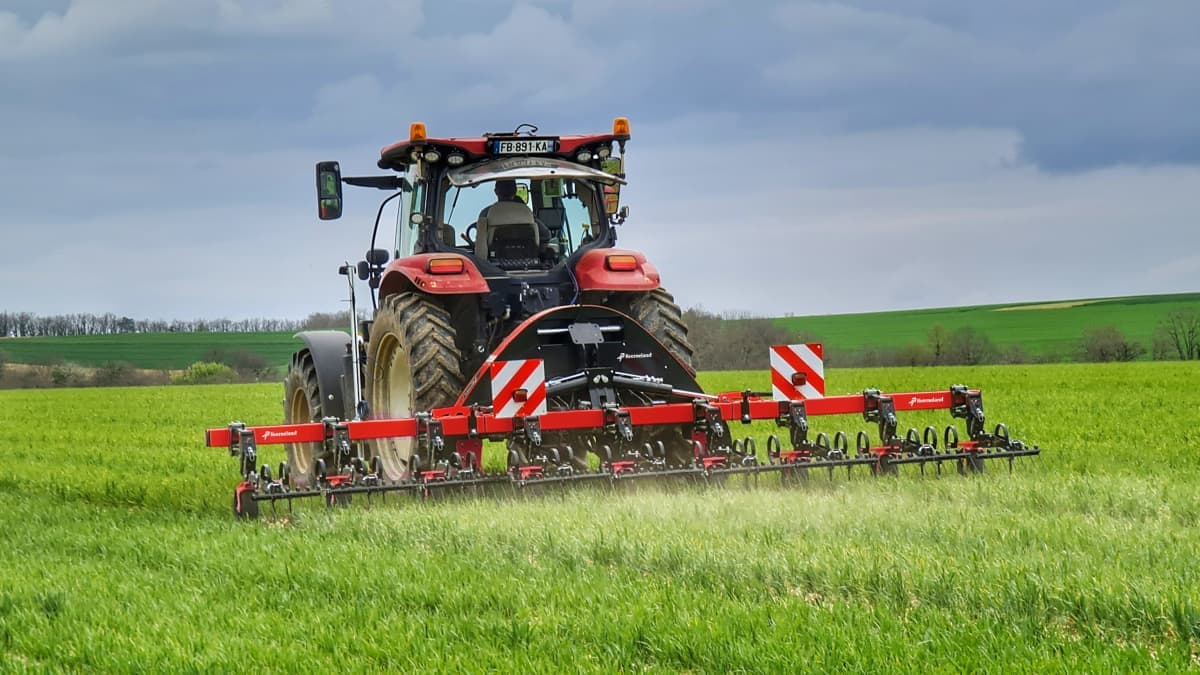
Compared to more traditional systems that rely on full-width cultivation using equipment such as power harrows or disc cultivators, this approach significantly reduces field passes and overall workload.
UK soils vary widely, from heavy clay to lighter loams, and drilling systems must perform consistently across these conditions.
On heavier soils, targeted cultivation helps relieve compaction and improve drainage without disturbing the entire soil profile. This can support stronger root development and reduce the risk of waterlogging.
On lighter soils, limiting disturbance helps conserve moisture and reduce erosion. Maintaining residue on the surface also protects the soil from weather impact and supports biological activity.
This adaptability makes strip till systems suitable for a wide range of farming conditions.
In challenging conditions, particularly on heavier land, soil structure plays a critical role in successful establishment. By creating defined channels for seed placement, strip till systems help manage moisture and reduce the risk of poor establishment in wet conditions.
On lighter soils, preserving undisturbed ground between rows helps maintain moisture levels during early growth stages.
Residue management remains an important part of the process. Equipment such as straw harrows is often used ahead of drilling to ensure even distribution and reduce the risk of blockages.
When reviewing drilling systems, it is important to consider overall efficiency rather than just initial investment.
Reducing cultivation passes can significantly lower fuel use and labour requirements. Fewer operations also reduce compaction risk caused by repeated machinery traffic.
While the upfront cost of strip till equipment can be higher than some conventional drills, the long-term savings in time, fuel and labour often offset this over several seasons.
Access to local suppliers and servicing support also plays a role in long-term value, ensuring machines remain reliable during key drilling periods.
Maintaining consistent performance requires regular inspection of key components such as tines, seed placement systems and consolidation elements.
Wearing parts should be monitored and replaced when needed to maintain accuracy. Cleaning after use helps protect equipment, particularly during wetter autumn conditions.
Reliable servicing support and access to parts are essential, especially during busy seasonal windows.
Drilling is only one part of the overall establishment process.
On many farms, strip till systems are integrated with other practices such as residue management, fertiliser application and occasional shallow cultivation. In some cases, equipment like power harrows may still be used strategically where additional surface refinement is required.
Aligning drilling with broader soil management and nutrient planning helps improve consistency across the entire system, supporting stronger crop establishment and long-term soil health.
Strip till drilling offers a practical alternative to full-width cultivation by focusing soil disturbance only where it is needed. This approach supports improved efficiency, reduced fuel use and better soil structure.
For farms looking to optimise establishment while maintaining flexibility across different soil types, Claydon drills UK provide a proven solution within modern direct drilling systems.
Ready to enhance your drilling efficiency?
Call our team today on Carrington 01205 480460 or Sutterton 01205 460600, or enquire now via our contact page to find the right setup for your farm.